


If you’ve lost one or more teeth, you’re probably weighing your options carefully. The question of dentures vs. implants — which actually preserves your jawbone in Cambrian Park — matters more than most people realize. Both solutions restore your smile. But they affect your jawbone in very different ways. Understanding those differences can protect your long-term oral health and quality of life.
Why Your Jawbone Matters After Tooth Loss
Most patients focus on the visible gap left by a missing tooth. What they don’t see is what’s happening beneath the gum line. Your jawbone needs constant stimulation to stay strong and dense. That stimulation normally comes from tooth roots pressing into the bone as you chew.
When a tooth is gone, the bone no longer receives that signal. Within the first year, you can lose up to 25% of bone width in the affected area. Over time, this bone loss reshapes your jaw, your face, and even your ability to chew comfortably. Choosing the right replacement directly affects how fast — or whether — that bone loss occurs.
Residents in Cambrian Park and across San Jose deserve a clear, honest breakdown of what each option actually does. Let’s look at both side by side.
How Dentures Affect Your Jawbone Over Time
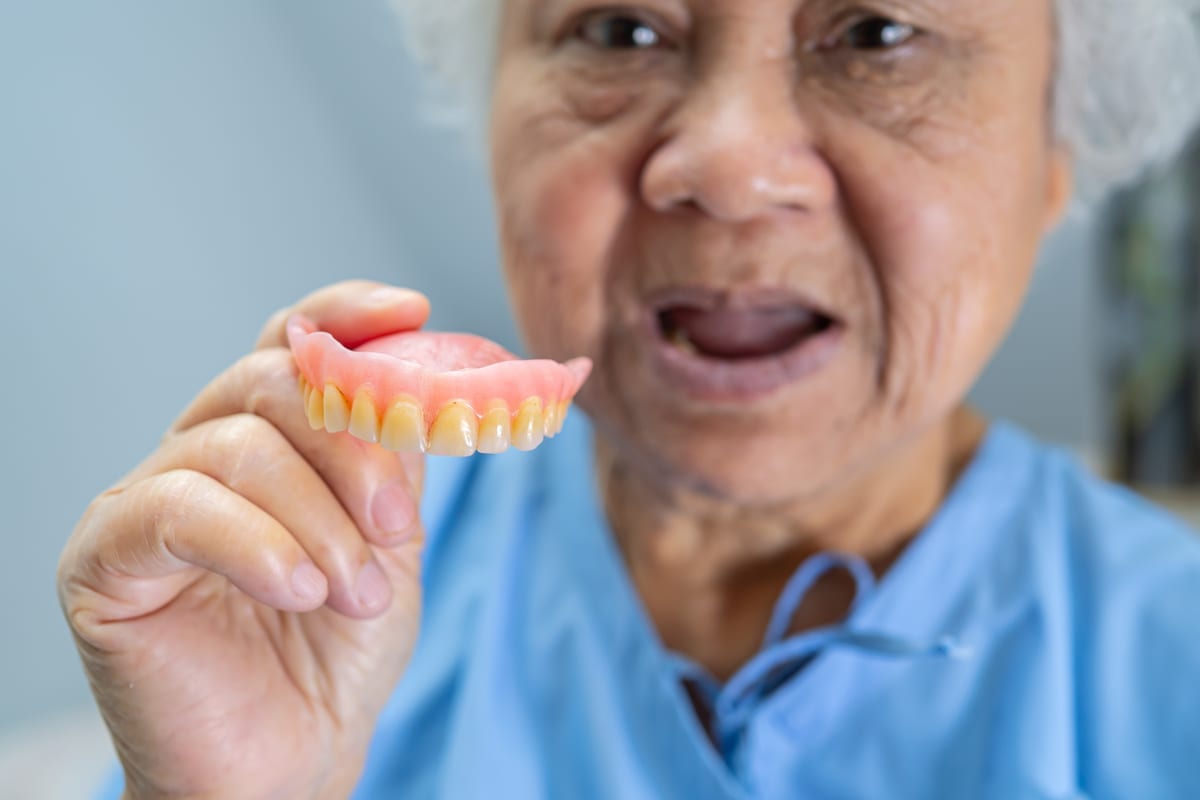
Dentures are removable appliances that sit on top of your gum tissue. They restore the appearance of teeth and allow you to eat soft-to-moderate foods. Many patients start with dentures because of lower upfront costs and shorter treatment timelines.
However, dentures do not stop bone loss. Because they rest on the gums rather than anchoring into the jaw, they provide no stimulation to the underlying bone. The bone continues to shrink. As it does, your denture fit changes — often requiring adjustments or replacements over the years.
Here are the key limitations of traditional dentures when it comes to bone health:
- They do not stimulate jawbone tissue
- Bone resorption continues underneath the appliance
- Fit degrades as the jaw shape changes
- Facial structure can appear sunken or aged over time
- Chewing efficiency decreases as bone volume shrinks
That doesn’t mean dentures are the wrong choice for everyone. For patients who cannot undergo surgery, they remain a functional and affordable option. But the bone loss concern is real and ongoing.
How Dental Implants Preserve Your Jawbone
Dental Implants work differently at a biological level. An implant is a titanium post placed directly into the jawbone. It mimics the function of a natural tooth root. As you chew, the implant transfers force into the bone — stimulating it and signaling the body to maintain bone density.
This process is called osseointegration. Over several months, the bone actually fuses with the implant surface. The result is a stable, permanent anchor that feels and functions like a natural tooth. More importantly, it actively prevents the bone loss that follows tooth extraction.
Here’s what implants offer that dentures cannot:
- Direct stimulation of the jawbone during chewing
- Prevention of bone resorption in the implant site
- Long-term stability without fit adjustments
- Preservation of facial structure and contour
- Restored bite force comparable to natural teeth
Dental Implant Surgery requires a healthy amount of existing bone. Patients who have already experienced significant bone loss may need a bone grafting procedure first. Dr. Sami Khayat evaluates each patient individually to determine the best path forward.
Comparing Cost, Function, and Long-Term Value
Cost is one of the first things patients ask about. Dentures typically have a lower upfront price. Implants require a larger initial investment. But the long-term math often tells a different story.
Dentures may need relining, adjusting, or replacing every five to ten years. As bone loss progresses, those adjustments become more frequent and more complex. Implants, when properly placed and maintained, can last decades — sometimes a lifetime. You also avoid the ongoing cost of adhesives, cleaning solutions, and repeated fittings.
Function is another major difference. Denture wearers often report difficulty eating hard foods, speaking clearly, and feeling confident socially. Implants restore nearly full chewing power. Most patients eat what they want and speak without hesitation. The psychological benefit of that confidence is significant and often underestimated.
From a purely practical standpoint, implants tend to offer stronger long-term value for patients who qualify medically and have sufficient bone volume to support them.
Which Option Is Right for You in Cambrian Park?
The honest answer is: it depends on your individual situation. Several factors influence which solution makes the most sense. These include your current bone density, your overall health, your budget, and your personal goals.
Some patients benefit from implant-supported dentures — a hybrid solution that anchors removable dentures to implant posts. This approach reduces bone loss while offering a more affordable alternative to full implant replacement. It’s worth discussing during a consultation.
Dr. Sami Khayat at Wisdom Oral Surgery & Dental Implants in San Jose specializes in evaluating these options with patients throughout Cambrian Park. He takes time to explain findings in plain language. He helps patients understand what their bone structure currently looks like and what it will likely look like in five or ten years without intervention.
If you’re trying to decide between dentures vs. implants and which actually preserves your jawbone in Cambrian Park, a thorough clinical evaluation is the best starting point. Book Now to schedule your appointment with our team.
Frequently Asked Questions
Do dentures cause bone loss in the jaw?
Yes. Traditional dentures rest on the gum surface and do not stimulate the underlying jawbone. Without that stimulation, the bone gradually shrinks over time. This bone resorption can change your facial shape and cause your dentures to fit poorly as years pass.
How long do dental implants last compared to dentures?
With proper care, dental implants can last 20 years or longer — often a lifetime. Traditional dentures typically require relining or replacement every 5 to 10 years, especially as the jawbone continues to change shape beneath them.
Can I get dental implants if I’ve already lost bone in my jaw?
Possibly, yes. Patients with some bone loss may still qualify for implants after a bone grafting procedure. Dr. Sami Khayat evaluates bone density using advanced imaging before recommending a treatment plan. Each case is different and requires an individual assessment.
What are implant-supported dentures?
Implant-supported dentures are removable dentures that snap onto implant posts anchored in the jaw. They offer more stability than traditional dentures and help reduce ongoing bone loss. This hybrid option works well for patients who want improved function at a lower cost than full implant replacement.
Is dental implant surgery painful?
Most patients report that the procedure is more comfortable than they expected. Local anesthesia is used during surgery, and sedation options are available for anxious patients. Post-operative discomfort is typically manageable with prescribed or over-the-counter medications and resolves within a few days.